Sandwich City: How Ruby Jewel Built a Portland Ice Cream Empire One Layer at a Time
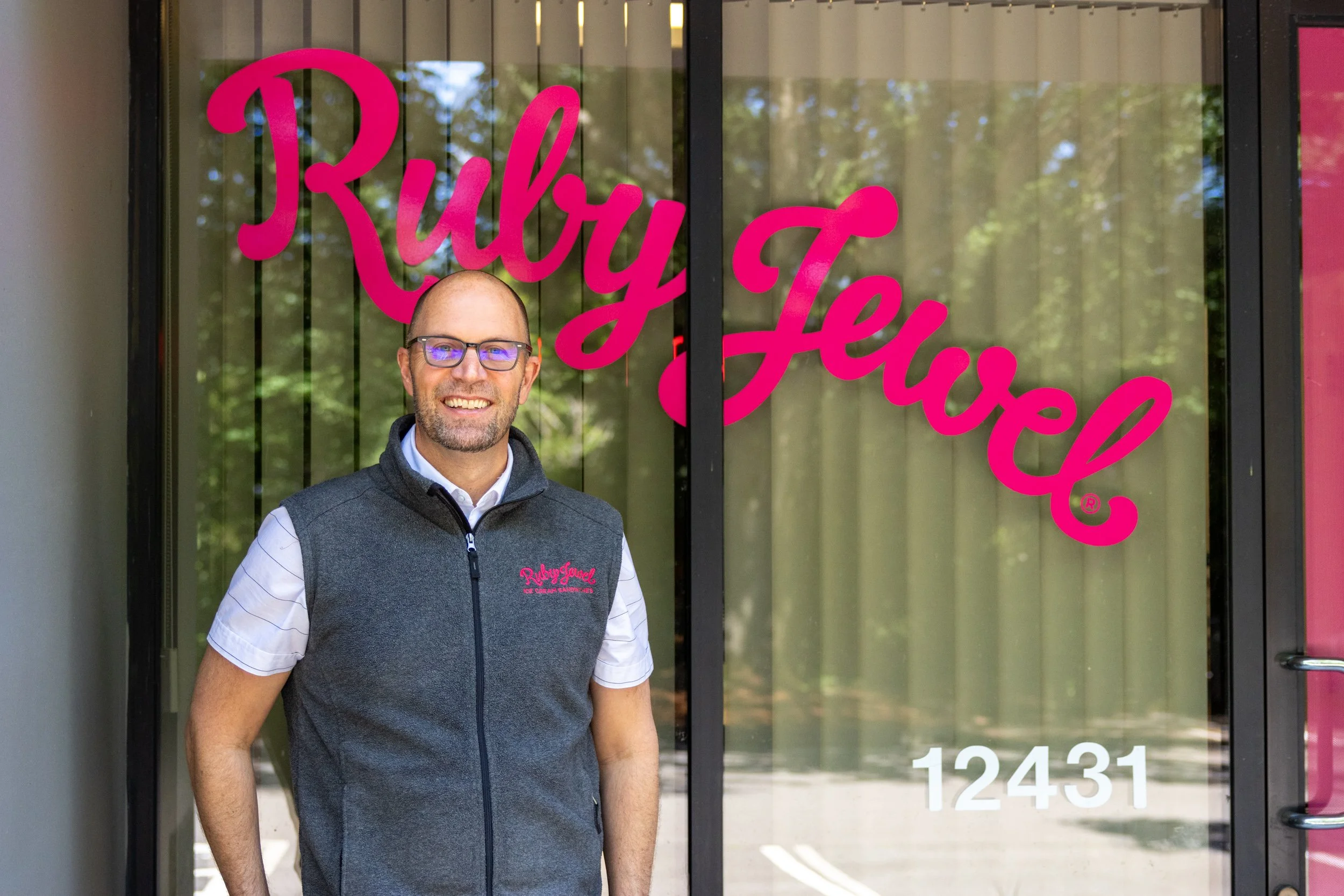
Some businesses find their focus by choice. Others find it by necessity. Ruby Jewel found theirs both ways — and the result is one of Portland's most quietly remarkable food manufacturing success stories.
A Dream Invented in a Restaurant Kitchen
It starts, as many great food ideas do, with someone staying late. In 2004, Lisa Herlinger was a chef at Milo's Kitchen in Portland's Irvington neighborhood with a dream of running her own food company. She was watching the market closely — noticing premium ice creams arriving on shelves, premium cookies doing the same — and spotted a gap nobody else had filled: why hadn't anyone combined the two into a premium ice cream sandwich?
So she started making them at night in Milo's kitchen after closing. Cookies baking, ice cream churning, and a product taking shape. She brought them to the Portland Farmers Market, where she developed an intensely loyal following. The line would form, and she'd sell out.
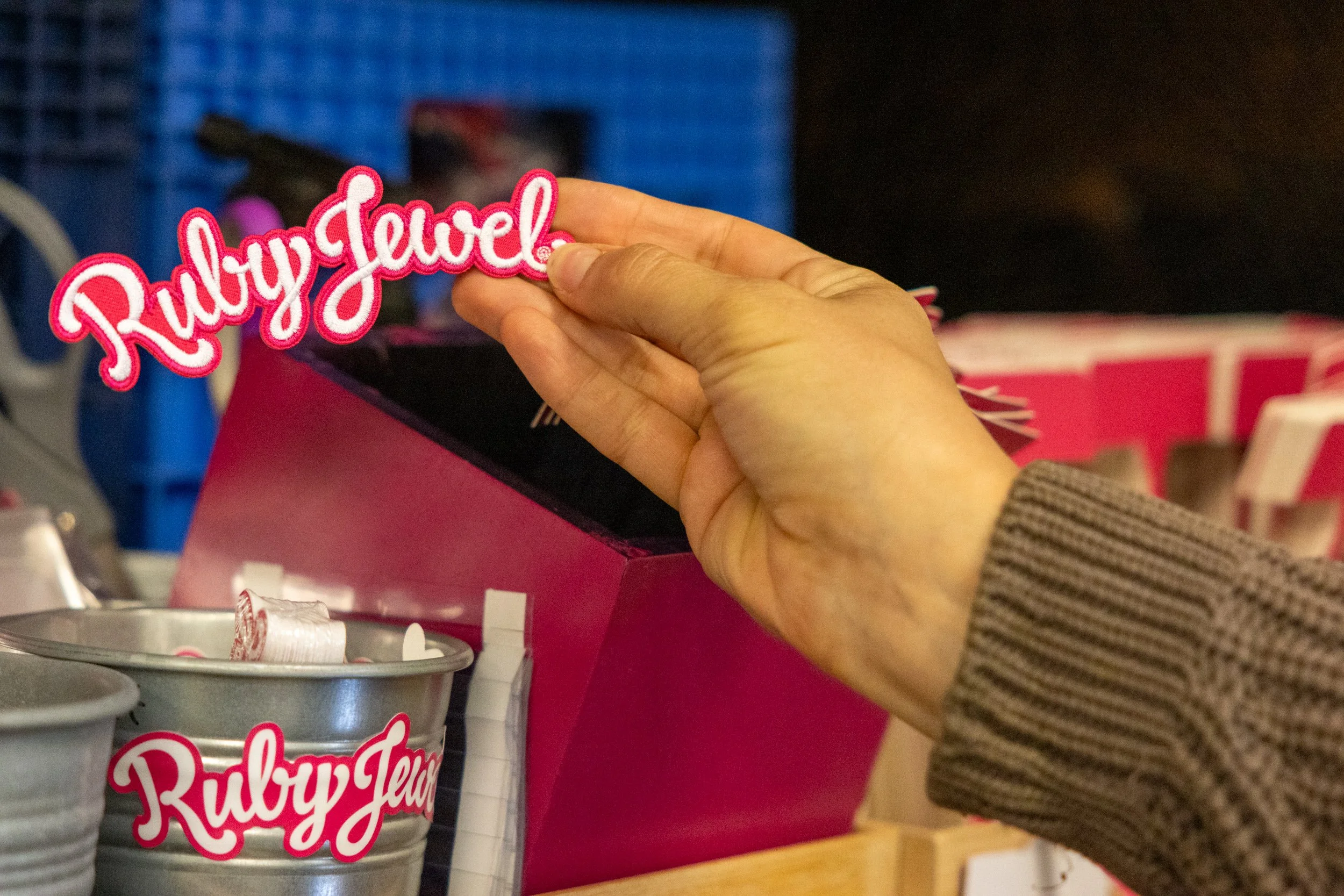
Among Ruby Jewel’s marketing materials: an embroidered patch
A win at an Oregon State University Food Innovation Center contest led to a Producer-in-Residence program, where Lisa learned the unglamorous but essential business of commercializing a food product: UPC codes, ingredient labels, packaging. From there, she started knocking on the doors of local retailers and co-ops. Whole Foods supported her through their Local Producer Loan program — twice. New Seasons ran a private label program with Ruby Jewel for five years. The foundation was being laid.
And the name? It came from a yurt in Colorado where Lisa stayed on a camping trip just before launching the business. She saw it and thought: that's a freaking cool name. She was right.
Growth, Complexity, and a Necessary Reset
By the time CEO Eric Koppelman joined the company in 2019, Ruby Jewel had grown into something sprawling and impressive — and maybe a little unwieldy. Four brick-and-mortar scoop shops. Four food trucks. Hundreds of catering jobs and events per year. A fleet of frozen delivery vehicles serving 180 locations across greater Portland. And in their last full year of ice cream production, 96 different flavors.
"It was just too much," Eric says plainly.
When the pandemic hit, the company was already rethinking its direction. The pandemic just accelerated the timeline. By April 2020, they had sold off all their ice cream-making equipment and gone all in on what the business had originally been built around: the ice cream sandwich.
It wasn't just a survival move. Trade partners affirmed it immediately. This is why we like you. This is how you're differentiated. The focus that felt like a retreat turned out to be a return to form.
Welcome to Sandwich City
Today, Ruby Jewel operates out of a 10,000-square-foot facility in Portland they've nicknamed "Sandwich City" — and the transformation inside those walls over the last four years has been extraordinary.
The operation has been almost entirely rebuilt. Millions invested in new equipment, automation, and process improvements. What once required 30 people on the manufacturing floor now runs with 8. Throughput — the number of sandwiches produced per hour — is roughly 30 times greater than it used to be. Yesterday, they made 17,000 ice cream sandwiches. This year, they'll ship approximately 3.1 million.
To put that in perspective: ice cream sandwiches were about 25% of Ruby Jewel's business right before the pandemic. In raw numbers, that was around 250,000 units. Now it's the whole business — and it's 3.1 million.
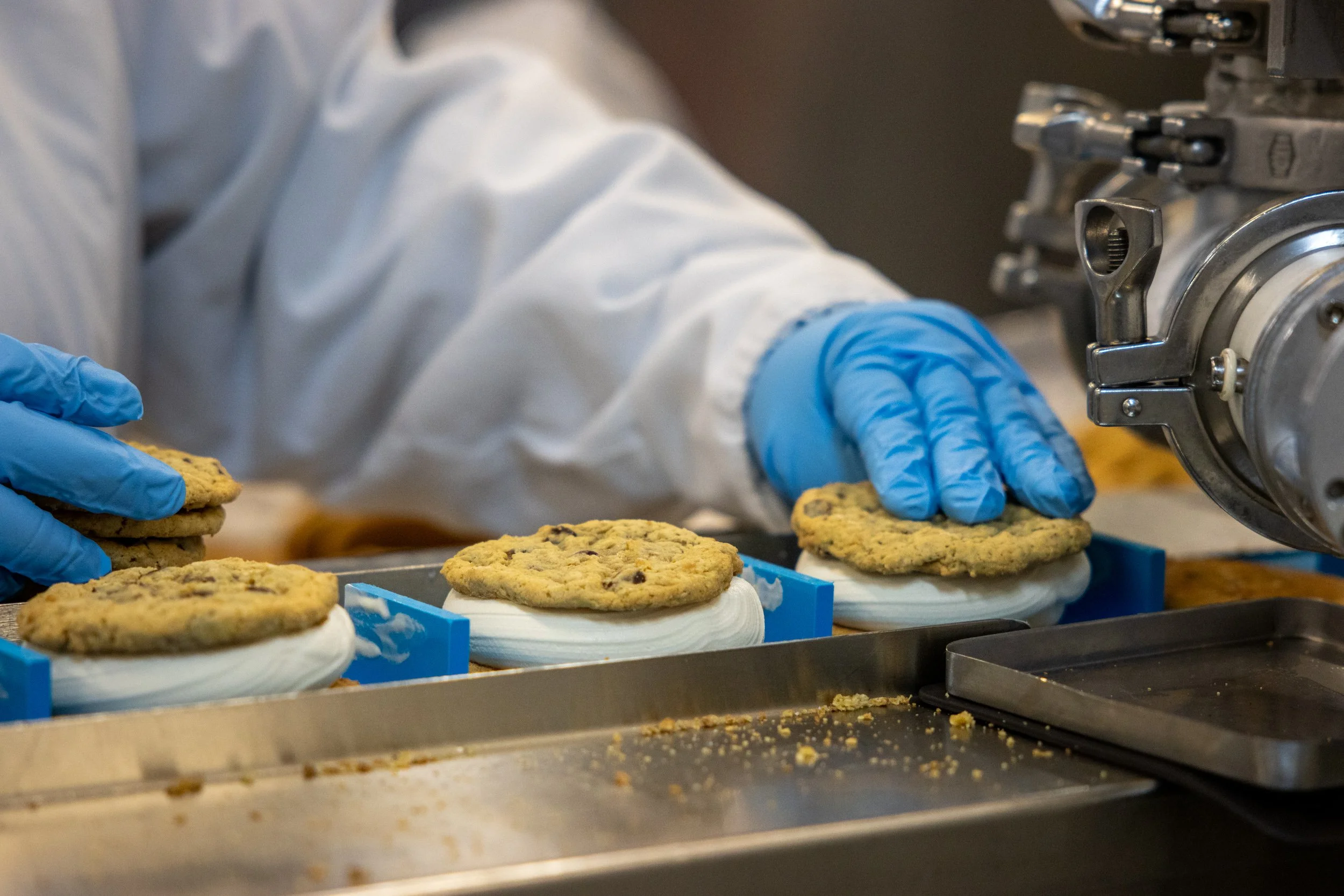
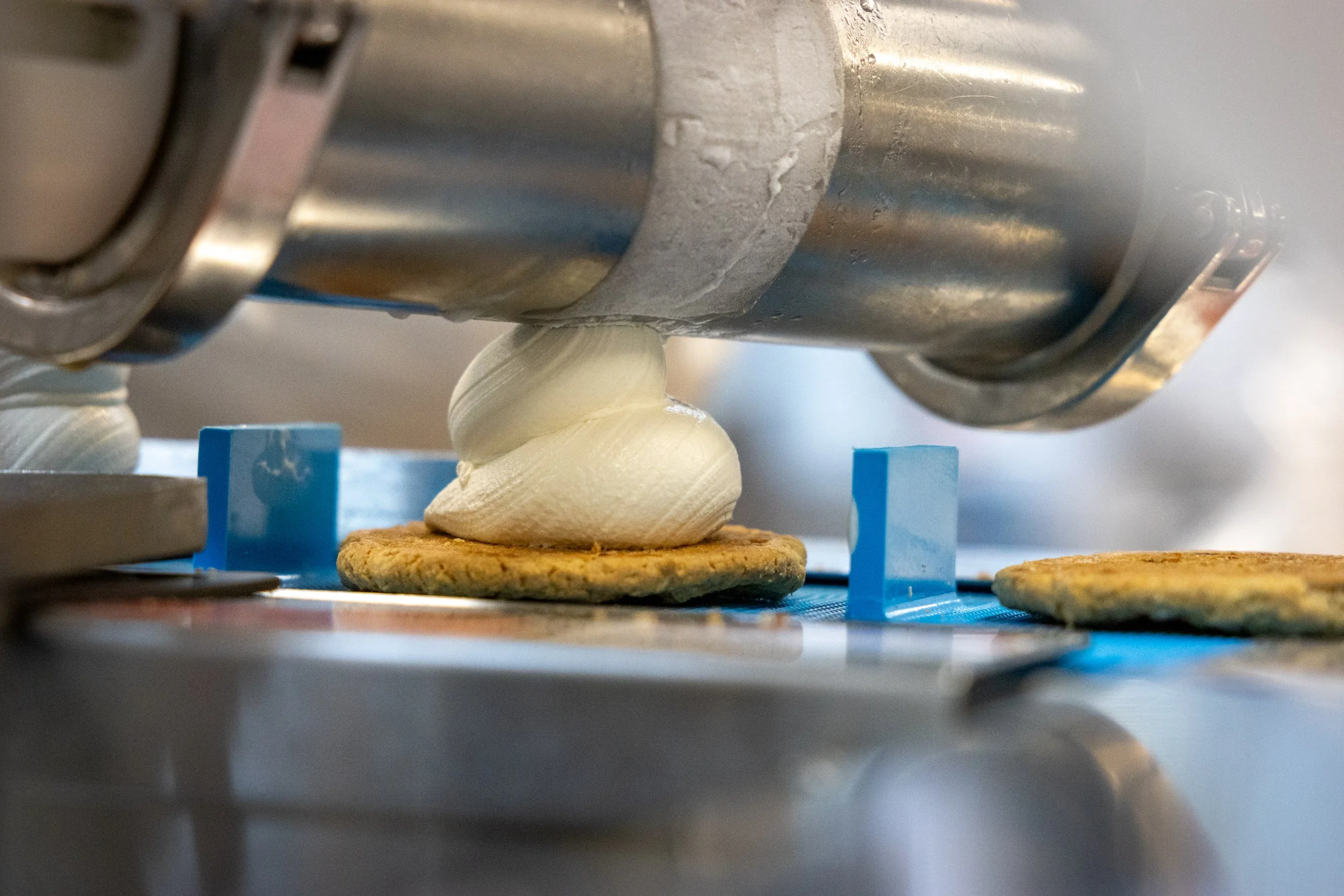
The process is meticulous. Every bottom cookie is still placed by hand. Ice cream depositing, freezing, and bagging are automated. Finished goods are palletized in a -10-degree walk-in freezer. The cookies are baked to a very low moisture count by a specialized bakery partner using a 100-foot tunnel oven — because moisture migrates from ice cream to cookie over the shelf life of the product and getting that balance right is a science unto itself. The dairy base is made to Ruby Jewel's exact specifications by a local dairy partner. No one else can buy that recipe.
Every single step, every piece of equipment involved, new in the last four years.
Focused, But Not Boring
Focus doesn't mean monotony. Ruby Jewel currently makes seven everyday flavors plus seasonal offerings, with a disciplined one-in-one-out policy: no new flavor gets added without one being retired. The approach has taught them something important about the value of constraint.
"There are just so many benefits to it," Eric says — more efficient use of storage, better quality consistency, deeper expertise in the products they do make.
Their newest product is a "not-so-mini mini" — a 2.8-ounce sandwich sold in a 3-pack, about 60% of the size of their classic. It's currently available through a handful of retail partners with broader rollout planned for the future.
A Portland Company Going National
Ruby Jewel services every major distributor in Oregon and Washington and has around 22,000 total points of distribution nationally across roughly 5,000 to 6,000 stores. In the Northwest alone, they're in over 3,000 store doors. You can find them in grocery stores, natural food stores, convenience stores, college campuses, and ski resorts — Mount Hood Meadows carries them in multiple locations.
The company is GMP-audited by Oregon's Department of Agriculture and recently scored a 99.7% on their GMP audit. SQF certification is the next milestone, and it's a matter of when, not if.
Recent grant support has accelerated their infrastructure investment. A $150,000 dairy equipment grant in 2023 through the Pacific Coast Coalition was followed by a $274,000 award for 2024 — funds that will help Ruby Jewel begin pasteurizing their ice cream dairy base on-site for the first time.
Twenty Years In, Just Getting Started
Two decades after a chef stayed late to bake cookies and dream up something new, Ruby Jewel is in more stores, making more sandwiches, and running a leaner and more capable operation than at any point in its history. The business that began at a farmers market in Portland is now shipping truckloads across the country.
The focus that was once forced upon them? Eric wouldn't have it any other way.
Ruby Jewel ice cream sandwiches are made in Portland, Oregon and available at thousands of retailers nationwide, including grocery, natural, convenience, and specialty stores.
More Portland food & beverage success stories